
Evesham Resident Lookup Record Trail
Different records answer different questions. A property card can connect a named taxpayer to a parcel, while a recorded deed can show a party's relationship to the property on a particular date. Court results identify a party role and case path, not a personal conclusion. The strongest Evesham resident lookup notes what each source actually confirms and keeps the access date, exact spelling, and record number with the result.
| Record | What it can confirm | Where | Access route |
|---|---|---|---|
| Municipal tax record | Named taxpayer or owner, parcel, and assessment context | Evesham WIPP | Portal, assessor counter, or a focused request |
| Recorded instrument | Party, document number, recording date, and legal description | Burlington PRESS | Name search from 1965; later block and lot search; pre-1965 archive |
| Voter status | Individual registration status and election geography | NJ Voter Search | Individual status tool or county election request |
| Superior Court case | Party role, docket, case type, and status | NJ Courts Find a Case | Public search plus court copy or records-request channels |
| Vital event | Birth, death, marriage, or family-relationship lead | Local registrar or NJDOH | Restricted copies; genealogy and archive routes vary by date |
| Historical notice | Former address, relatives, event date, or community clue | BCLS notices index | Searchable citations and underlying newspaper access |
Start with property and PRESS when an address or parcel is known. Begin with court, voter, vital, or newspaper material when a name and date are stronger. Do not turn a tax mailing address into proof that someone is physically present at the parcel. The situs address is the location of the parcel, while the mailing address is where tax correspondence goes.
Note: Record the source date and the person's documented role, because a taxpayer, court party, and historical notice subject may be different people.
Define an Evesham Resident Search First
State the narrow question before opening a search form: whether a person is tied to a dated parcel record, whether a court case belongs to the right person, whether a former family member appears in a historical notice, or whether an estate filing identifies an executor. Use one distinctive detail with the name, such as a known street, spouse, approximate date, or block and lot.
Compare converging identifiers rather than relying on a surname and ZIP alone. A shared name can belong to an estate, a trustee, a company, a party's representative, or an unrelated person. Keep the source URL, record date, document or docket number, exact spelling, and a short reason why the records appear to point to the same individual.
When a name is only a historical lead, the Evesham City Directory supplies the county-directory and newspaper path without treating old entries as current information.
Evesham Resident Court Records
Evesham residents can appear in separate court layers. The Evesham Municipal Court handles local ordinance, traffic, disorderly-person, fish-and-game, and weights-and-measures matters within its jurisdiction. Burlington Superior Court handles county civil, criminal, family, foreclosure, special civil, and Tax Court matters. The statewide NJ Courts Find a Case hub separates civil, criminal, judgment, lien, Tax Court, and municipal paths.
| Party-name route | Choose individual or business, enter last and first name, and add a middle initial when known. |
|---|---|
| Docket route | Use an exact docket number when a notice or prior record provides one. |
| Judgment route | Search a judgment number or party name when that is the record type sought. |
| County filter | Refine a statewide result to Burlington when the available search path permits it. |
| Date or case filter | Use it to separate similar names or narrow a result list. |
NJ Courts Find a Case shows the public search routes used for a name or docket review.
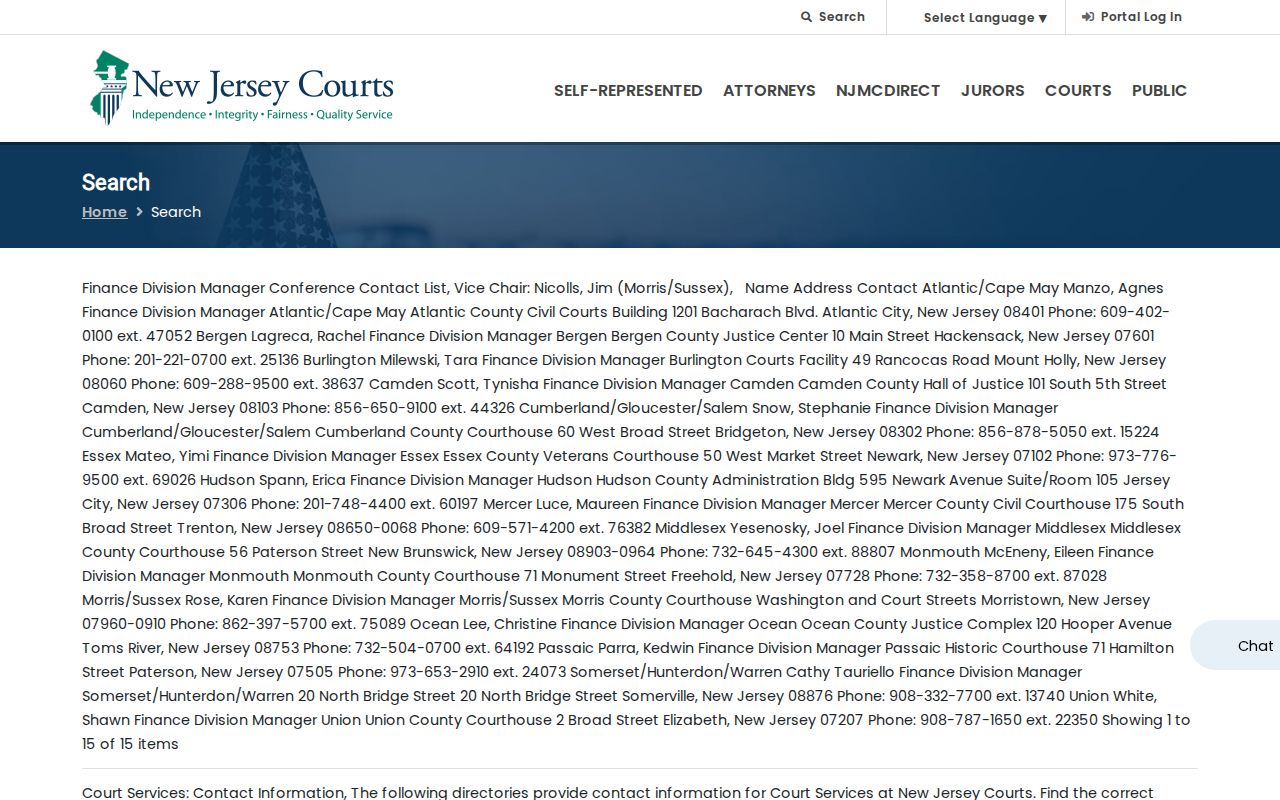
A result row can show the name, venue, docket number, case caption, and initiation date. Opening a docket may lead to the case jacket. Read the party role and the disposition or status; a docket is a record of a case, not proof of liability or guilt. Sealed, expunged, juvenile, adoption, and many family records are not open through ordinary public access.
For a file rather than a search result, use the Judiciary's copy procedure, its records-request form, or the appropriate clerk. Closed or archived Superior Court files route through the Superior Court Clerk's Office. Municipal cases do not have a public name-based resident directory, so a ticket, complaint, or focused court request is the practical fallback.
Verifying an Evesham Resident Lookup
Use a repeatable sequence when records point to a likely match. The goal is not to collect every result with a matching name. It is to anchor one person to independent facts that agree over time. A parcel's block and lot, a dated deed, a spouse reference, and a docket venue can do more than a stack of undated name matches.
- Start with the best known address or person name and save the exact spelling, access date, and record date.
- Check the Evesham tax portal or county parcel data, separating the parcel's situs from any mailing address.
- Search PRESS for a recorded deed, mortgage, or lien and match the party to the parcel's block, lot, or legal description.
- Run the court party search with name variants, then compare venue, party role, docket, and initiation date.
- Use a newspaper notice or the correct vital-record channel only as the next confirmation step, not as a substitute for a restricted certificate.
- Docket
- The court's tracking number and case record. It identifies a proceeding but does not decide what the result means.
- Index versus image
- An index points to a record. The underlying image or file may contain context, may require a separate request, or may have redactions.
- Certified copy
- A copy authenticated by the custodian for an eligible requestor or an authorized purpose. It is different from an informal search result.
Note: If the only shared fact is a last name, keep the result as an unverified lead until another dated identifier agrees.
Evesham Resident Voter Status
The New Jersey Voter Search is an individual status check. State guidance says it helps a voter confirm registration status, spelling, and county. The live form was blocked during research, so its full field list should not be treated as verified here. Names with hyphens, spaces, and middle initials need to match the county's spelling.
The state registration check is designed for an individual record, not a street-wide or all-resident list.
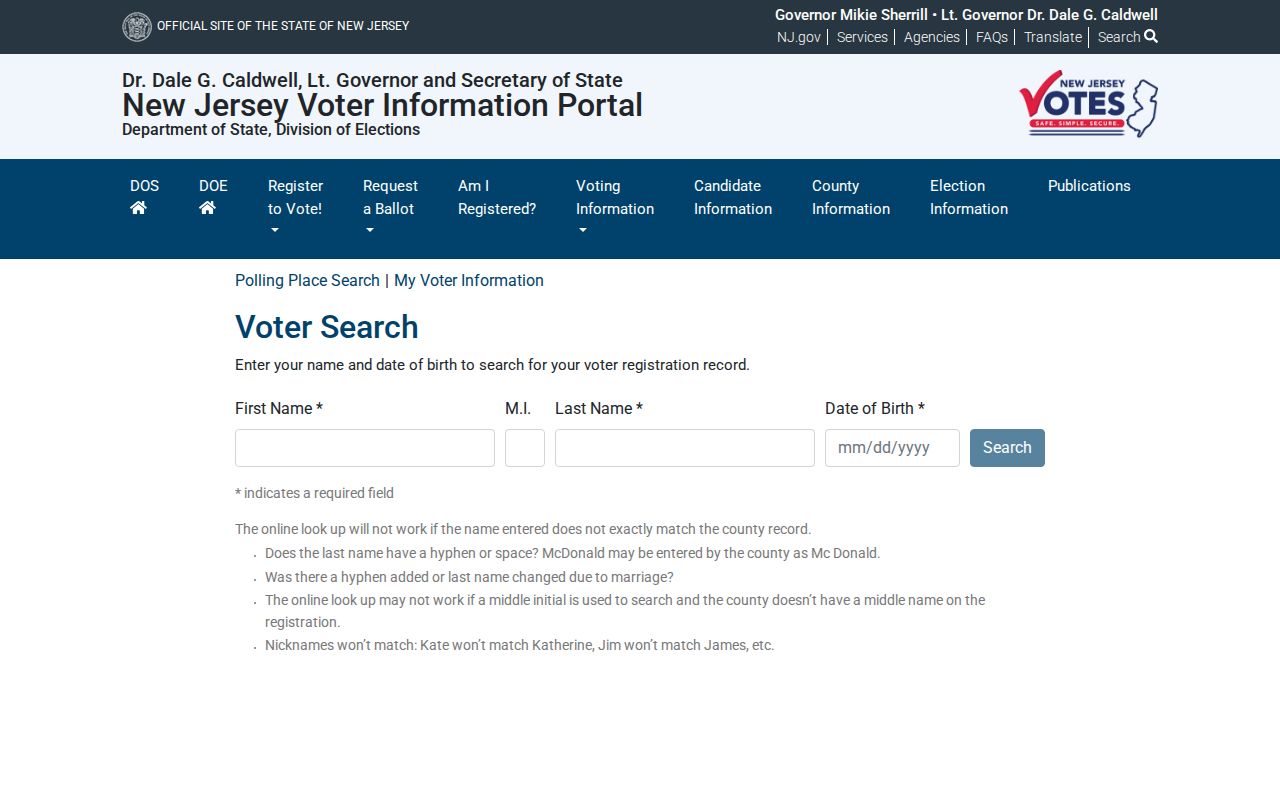
“Inactive” status can mean that an address came into question after a notice was returned undeliverable or suggested a move. It does not establish where a person is now. The polling-place search is likewise an address tool that returns a polling location and district, not a directory of names.
For a legally disclosed registration list, the county Superintendent of Elections uses an OPRA request form. New Jersey law permits a voter to obtain a printed list for $0.25 per election district, but N.J.S.A. 19:31-18.1 restricts commercial or charitable solicitation. Protected-person rules and signature or identification redactions still apply.
Evesham Vital Record Leads
For an Evesham event, begin with the local registrar through the Township Clerk and Vital Records route, then use the New Jersey Department of Health Office of Vital Statistics and Registry for state-held records. The Burlington County Clerk is not the regular custodian for births, deaths, marriages, adoptions, civil unions, domestic partnerships, or divorces. A BCLS notice can suggest an event, but it is not an official certificate.
| Record type | Public search status | Key access limit | Fallback |
|---|---|---|---|
| Birth | No official online vital search located | Current 80 years restricted | Local registrar, NJDOH, or State Archives for older material |
| Death | No official online vital search located | Current 40 years restricted | Registrar, NJDOH, BCLS notices, cemetery and obituary leads |
| Marriage | No official online vital search located | Current 50 years restricted | Registrar, NJDOH, newspaper or historical collection lead |
| Divorce decree | Court index may provide a lead | Restricted to a party, attorney, or court order route | Superior Court Records Center request |
New Jersey's genealogy window applies to deceased persons with births older than 80 years through 1925, marriages older than 50 years through 1951, and deaths older than 40 years through 1951. The state sets a $25 initial search or copy fee and $2 for an additional copy of the same record. Genealogy mail requests need a full name, city or county, and year; older records may route to the New Jersey State Archives.
Certified current copies need the appropriate relationship or authorization plus identification. Do not send original documents. For a historical name question, request the record type that fits the date and use the notice index, church registers, cemetery transcriptions, or obituaries only as supporting leads.
Evesham Resident Special Leads
An estate question is best anchored in Burlington Surrogate petitions, wills, letters testamentary, recorded estate deeds, and obituary notices. These sources can identify an executor, heir, property connection, or death endpoint. The research found Burlington probate guides and older State Archives microfilm paths, but not a complete open name index for every era.
For an adoptee or birth-family question, use the official NJ DCF CP&P Adoption Registry. It serves eligible adult adoptees, adoptive parents of minor adoptees, and qualifying birth parents when CP&P or a predecessor agency handled the adoption. The program offers registration, non-identifying information, limited searches, and referral. It does not release identifying information without the required permission and is not an open address search.
A former classmate or historical community connection is better pursued through BCLS newspapers, yearbooks, alumni offices, and the Evesham Historical Society. A business affiliation can be checked in the New Jersey business entity search or professional license verification, but a filing or credential does not prove where a person lives.
Evesham Resident Privacy Boundaries
New Jersey restricts driver and vehicle information, current vital records, juvenile and adoption material, sealed or expunged court records, and many family-record details. The Address Confidentiality Program can substitute a Trenton mailing address for qualifying survivors. Daniel's Law protects home addresses and unpublished phone numbers for covered officials and eligible immediate family members. A missing owner name in a state parcel service may reflect a lawful protection rather than an empty record.
Daniel's Law is administered through the DCA Office of Information Privacy, while the Address Confidentiality Program provides its own eligibility and substitute-address process. These programs do not make an old recorded instrument disappear automatically. For a wrong public-record association, preserve the instrument, docket, parcel, or URL and contact the custodian for the correct correction or redaction process.
In April 2025, the DCA reported that more than 10,000 people were designated Daniel's Law covered persons. A redacted address or owner field can therefore reflect a legal safeguard rather than a failed search.
Lawful use. Use Evesham resident records for personal, lawful research. New Jersey law does not permit using public information to stalk, harass, intimidate, or harm another person.
Evesham Records Request Follow-up
When an online result ends, request an existing, identified record from the office that holds it. Evesham Township routes local requests through its OPRA information page, which directs police, fire-rescue, utility, and township records to the appropriate channel. A useful request names the record series, person or address where relevant, date range, and a document, parcel, or case number when known.
The governing statute is the New Jersey Open Public Records Act, P.L. 2001, c.404, N.J.S.A. 47:1A-1 et seq. OPRA provides access to existing government records subject to exemptions; it does not require an agency to create a new identity profile or disclose restricted material. For a court file, use the court request route. For a vital record, use the registrar, NJDOH, or archive path that matches the event date and eligibility rules.
Note: Ask for a particular record and retain the custodian's response, rather than filling gaps with an assumption about the person.